
MPR Drug and Medical Guide
Haymarket MediaMedical
4.3358.00 Reviews
- Version
- 7.12.2.2914
- Installs
- 100.00K
- Age Rating
- Everyone
Screenshots
Our Review of MPR Drug and Medical Guide
 Analysis by Appyee
When I first open a medication reference, I want to know two things quickly: whether it can help with the question in front of me, and how much confidence I should place in the answer. MPR Drug and Medical Guide is aimed at those looking for a medical reference on a phone, especially people who regularly need to look up medicines. I would treat it as a practical starting point for checking information, not as a substitute for a clinician, pharmacist, or the official instructions that come with a prescription.
What to expect from a pocket drug reference
This is a medical app from Haymarket Media, and its focus is reflected in the name: drug information and reference material rather than appointment booking, personal health records, or a broad wellness program. The app is free to install, though in-app purchases are listed from $34.99 to $69.99 per item. I’d check what is included before relying on any paid material, especially if I only need an occasional lookup.
The app has an average rating of 4.3 from around 1,400 ratings, with about 359 written reviews, and it has passed 100,000 installs. Those figures suggest that it has found a substantial audience, but they don’t tell me whether a particular drug entry suits my needs. I’d judge it by how easily I can locate the medicine and whether the information answers the specific question I have.
Its history stretches back to October 26, 2010, and the current version is 7.12.2.2914. It is listed for devices running Android 8.0 or later, and its content rating is Everyone. That broad age rating doesn’t mean every medical topic is suitable for every reader; drug details can be technical, and I’d still use professional guidance for decisions about treatment.
First Impressions and Interface
So, I downloaded the MPR Drug and Medical Guide, and right off the bat, I was impressed by the clean and user-friendly interface. The layout is intuitive, making it a breeze to navigate. It's like the app holds your hand and guides you through its features without overwhelming you. No need to be a tech wizard to figure this one out!
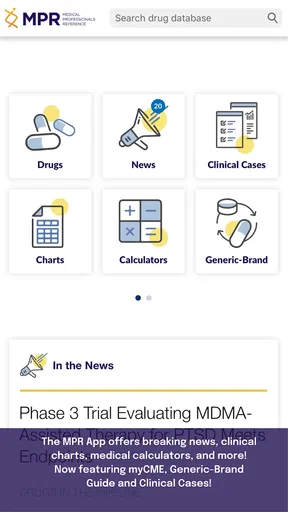
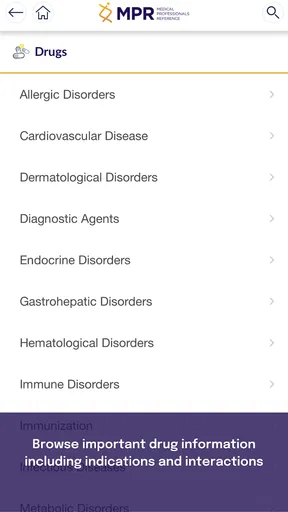
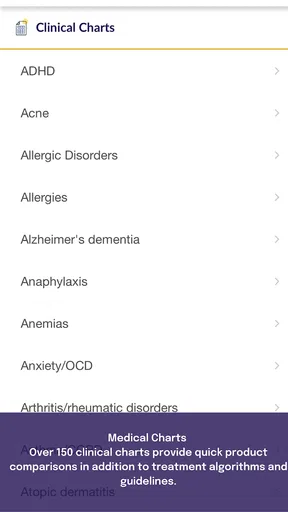
The home screen is neatly organized with categories like Drug Monographs, Medical News, and Calculators. Each section is clearly labeled, so you know exactly where to go for what you need. It's like walking into a library where every book is perfectly categorized and easy to find.
Getting set up without overthinking it
For a first-time user, I’d keep the setup simple: install the app, open it, and start with one real question rather than trying to explore every section at once. If I’m looking up a medicine I’ve been prescribed, I’d use the name on the label and compare the result carefully with the spelling and form shown there. Similar names can be easy to confuse, so I wouldn’t rely on a half-remembered brand name or a vague search.
Before paying for anything, I’d first see whether the free experience covers my intended task. The available purchase range is a meaningful consideration for students, occasional users, and anyone who only needs one answer now and then. A person who expects to consult reference material frequently may value a deeper resource differently from someone checking a medicine once a month.
Diving Into the Features
Now, let's talk about the real meat of the app—the features. The Drug Monographs section is a treasure trove of information. It provides detailed descriptions of drugs, including their uses, side effects, interactions, and even pricing. It's comprehensive yet concise, giving you all the info you need without drowning in medical jargon.
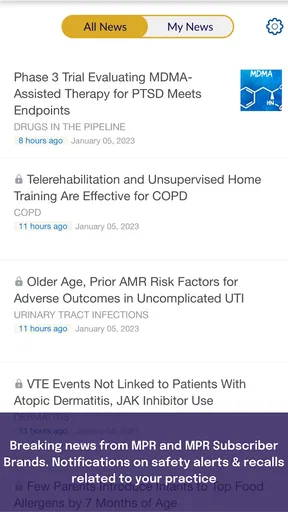
Then there's the Medical News section, which keeps you in the loop with the latest happenings in the medical world. Whether it's groundbreaking research or updates on medical guidelines, you'll find it here. It's like having a little newspaper dedicated solely to health and medicine.
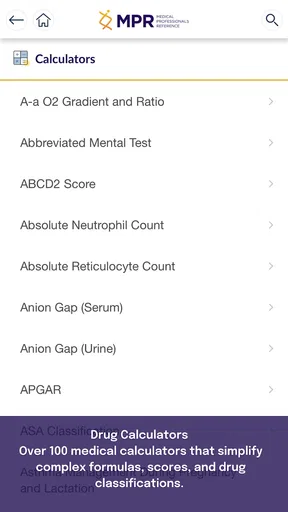
But wait, there's more! The app also includes handy Calculators that can help with dosing and other medical calculations. It's perfect for healthcare professionals who need to make quick calculations on the fly. No more fumbling with numbers in your head or scribbling on paper.
Making the first lookup useful
A good first test is to search for a medicine you already know, then check whether the monograph makes it easy to distinguish the drug’s uses, possible side effects, and interaction information. That lets me learn how the app organizes an entry before I’m under pressure to answer something unfamiliar. I’d also note the exact term or spelling that produced the clearest result, so a later lookup is faster.
When checking a possible interaction, I’d treat the app as a prompt for a more informed conversation, not a green light to combine medicines. The practical next step is to tell a pharmacist or prescriber the names of all medicines and supplements involved and ask about the specific combination. This matters especially when doses, timing, health conditions, or changes to a prescription affect the decision.
Where the reference helps—and where it needs a human
For a clinician who needs to refresh a drug detail between tasks, having monographs and calculators on a phone can be more convenient than reaching for a large reference book or opening a general web search. The value is not just portability: a focused drug guide can keep the lookup centered on medicine-related material, while broad search results may mix professional references with commercial pages, forum posts, and content aimed at a different audience.
That focus also has limits. A monograph cannot know a patient’s full medical history, and a calculator cannot decide whether a particular treatment is appropriate. I would not use an app result alone to start, stop, or change a prescription. If the question is urgent, involves a serious reaction, or depends on individual clinical details, contacting a qualified professional is the better route.
For everyday readers, the guide may be useful when a label or consultation leaves a term unclear. It is less suitable for someone seeking a personalized diagnosis, a complete record of their own care, or step-by-step treatment instructions. In those situations, a clinician, pharmacist, or patient portal is a better fit than a drug reference.
A realistic moment when it earns its place
Imagine that I’m at home sorting out a new prescription and notice that I already take another medicine. I can look up each name, read the interaction information, and write down the exact concern to raise with the pharmacist. That can make the call more focused than asking a vague question like “Are these okay together?” It does not settle the decision, but it helps me arrive with useful details.
Another practical use is preparing for a conversation before an appointment. I might review a monograph to understand the terminology around a medicine, then bring questions about side effects or alternatives to the clinician. I would avoid treating the news section as a personal recommendation: general medical developments may not apply to my circumstances or replace advice about my current prescription.
Common points of confusion
One easy mistake is to assume that finding a medicine entry means every formulation or situation has been covered by the same answer. I’d read the entry in context and make sure the medicine matches the one I mean, rather than transferring information from one similarly named product to another. For dosing questions, I’d be especially careful to confirm the relevant details with a professional instead of using a calculator as a stand-alone instruction.
Another is expecting the app to behave like a consumer medicine cabinet that tracks personal doses or sends reminders. Its described emphasis is reference content, news, and calculators. If my main need is remembering when to take a medicine, I’d look for a dedicated medication-management tool instead of assuming a reference app will handle that workflow.
People may also wonder whether the app is worthwhile if they can search the web for a drug name. A general search is convenient for a one-off definition, but it can require more judgment to separate reliable clinical material from less relevant pages. A specialized reference is more purposeful for repeated lookups; the trade-off is that it may be more detailed than a casual user needs, and paid content can make the cost less attractive for infrequent use.
Real-World Application
So, how does all this translate to real-world use? Well, imagine you're a busy medical professional, juggling multiple patients with different prescriptions. Instead of flipping through hefty textbooks or waiting to access a computer, you can whip out your phone and have all the information at your fingertips. It's like having a personal assistant who specializes in pharmacology.
Even for someone who's not in the medical field, this app is a gem. Ever had a prescription and wondered if it would clash with another medication you're taking? A quick search in the app, and you've got your answer. It's peace of mind in digital form.
I’d soften that last promise in practice: a quick search can help me identify what to ask, but it should not be the final word on whether two medicines are safe together. If I’m comparing options for a patient, I’d use the result as one reference point alongside professional judgment and the relevant clinical context. For a person managing their own care, the safest payoff is a clearer, better-prepared question for a pharmacist or prescriber.
Who will get the most from it
I can see the strongest case for this app among healthcare workers, medical learners, and readers who consult drug information often enough to appreciate a dedicated reference. The combination of monographs, news, and calculators puts several kinds of medical lookup in one place. It may also suit a curious patient who wants to understand vocabulary before a consultation, provided they are comfortable separating general information from personal advice.
I’d skip it if I only need reminders, prescription ordering, a symptom checker, or a personalized care plan. It is also not the right sole source for someone who needs a clinician to interpret complex medication decisions. For occasional basic questions, a pharmacist or a trusted patient-facing resource may be easier to approach; for repeated professional use, a specialized reference can be more efficient than searching across unrelated pages.
Before making it part of a work routine, I’d check that the version available on my device supports the reference tasks I actually need and that any paid item makes sense for how often I’ll use it. The Android minimum is 8.0, so compatibility is worth checking before planning around it. The app is also available in the medical category on the store, but its usefulness still depends on whether its reference style matches the reader’s experience and purpose.
Final Thoughts
In a nutshell, the MPR Drug and Medical Guide is a powerhouse of information packaged in a sleek, user-friendly app. It's perfect for healthcare professionals and everyday folks alike, offering a wealth of knowledge at your fingertips. Whether you're prescribing, dispensing, or just curious about medications, this app is a must-have in your digital toolkit.
So, if you're looking for a reliable, comprehensive, and easy-to-use medical guide, give this app a go. Trust me, you'll wonder how you ever managed without it!
My more measured recommendation is to try it with a specific, low-stakes lookup and see whether the way it presents drug information suits you. If you work with medicines regularly, its focused reference approach may save time; if you only need occasional help, consider whether the paid options are worthwhile before committing. Either way, I’d use it to become better informed—not to replace the pharmacist or clinician who can apply that information to an individual case.
Verdict
Strengths of MPR Drug and Medical Guide
- Comprehensive drug database.
- User-friendly interface.
- Offline access available.
- Regular updates ensure accuracy.
- Includes interaction checker.
Limitations of MPR Drug and Medical Guide
- Limited customization options.
- Some features require subscription.
- No dark mode available.
- Occasional loading delays.
- Ads in free version.
Similar Picks in This Category
View All
WebMD: Symptom Checker
WebMD, LLC4.1

Microphone Amplifier
DOSA Apps4.2

Anatomy Learning - 3D Anatomy
3D Medical OU4.5

Period Tracker and Calendar
SimpleInnovation4.9

GoodRx: Prescription Coupons
GoodRx4.8

CVS Health
CVS Pharmacy4.5
Frequently Asked Questions
What is MPR Drug and Medical Guide used for?
MPR Drug and Medical Guide is a comprehensive resource designed for healthcare professionals to quickly access drug information, including dosing, interactions, and side effects. It serves as a reliable tool for making informed decisions about patient care and medication management, ensuring the latest information is at your fingertips.
Is MPR Drug and Medical Guide available for both Android and iOS devices?
Yes, MPR Drug and Medical Guide is available for both Android and iOS platforms. Users can download the app from the Google Play Store or the Apple App Store, making it accessible for a wide range of devices. This allows healthcare professionals to have critical information readily available on their preferred device.
Does MPR Drug and Medical Guide require an internet connection?
MPR Drug and Medical Guide offers offline access to its extensive database, which means you can use it without an internet connection. However, for the latest updates and additional features such as news and alerts, an internet connection is necessary to ensure you have the most current information.
Is there a cost to download or use MPR Drug and Medical Guide?
MPR Drug and Medical Guide is free to download, but it may offer in-app purchases or subscription options for premium features and content. These premium versions might include advanced tools, additional resources, or ad-free experiences, which can enhance the app's functionality and user experience.
How frequently is the information in MPR Drug and Medical Guide updated?
The MPR Drug and Medical Guide is regularly updated to reflect the latest in drug approvals, clinical guidelines, and medical research. This frequent updating ensures that healthcare professionals using the app have access to the most current and accurate information, critical for effective patient care and decision-making.
